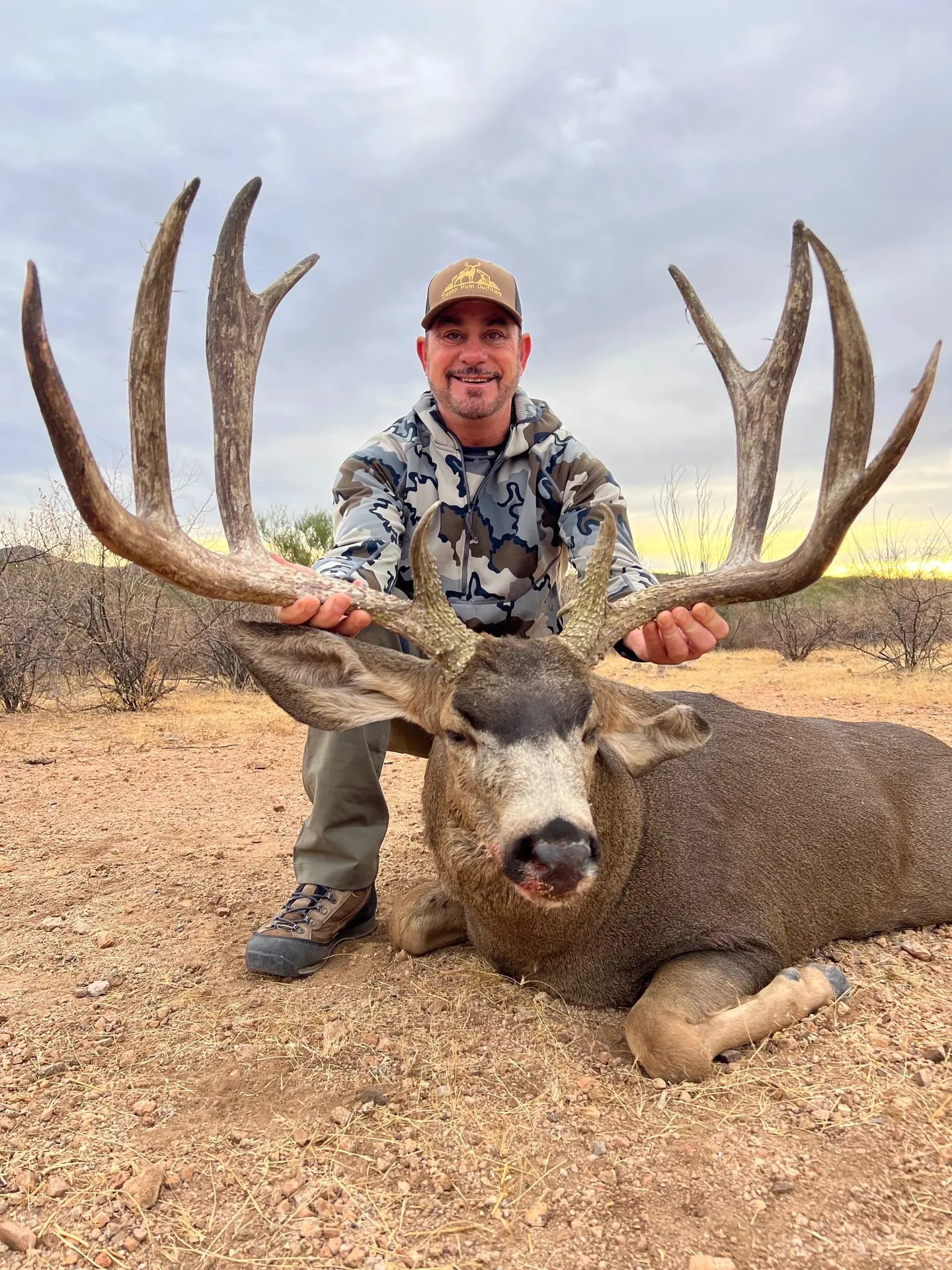
Glassing the Grey Ghost: how we find Coues bucks
Coues whitetails reward patience and good glass. Here's the grid we use, the bino setup we recommend, and what 'cutting up the country' actually means.
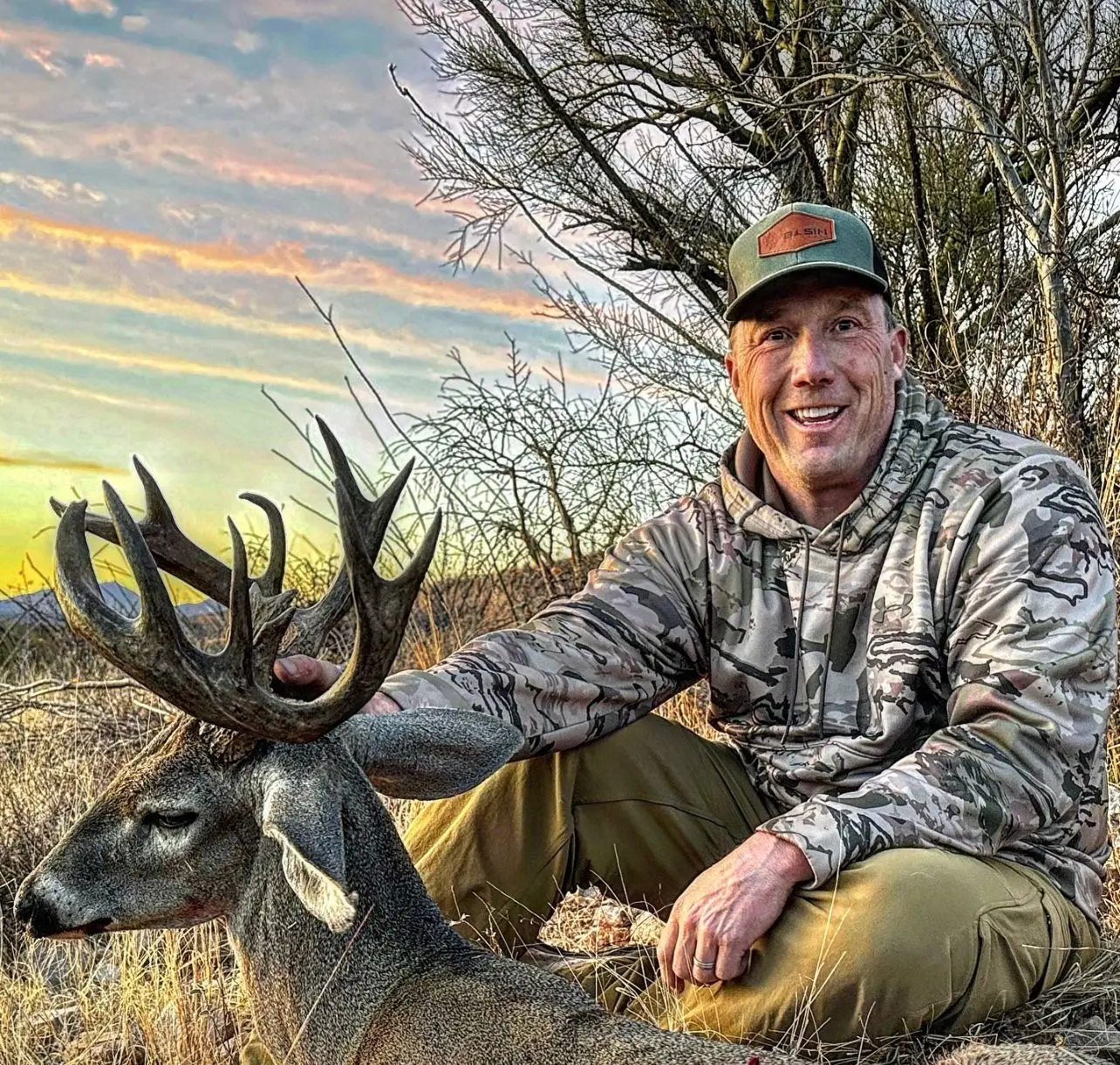
A Coues buck weighs 90–110 pounds and lives on oak-studded ridges where his grey-brown coat disappears against rock. You will not stumble across him. You will sit behind glass for hours until his ear flicks, his antler tine catches sun, or his white throat patch betrays his bed.
The optic stack
- 10x42 binos on a chest harness — primary tool, on your face all day.
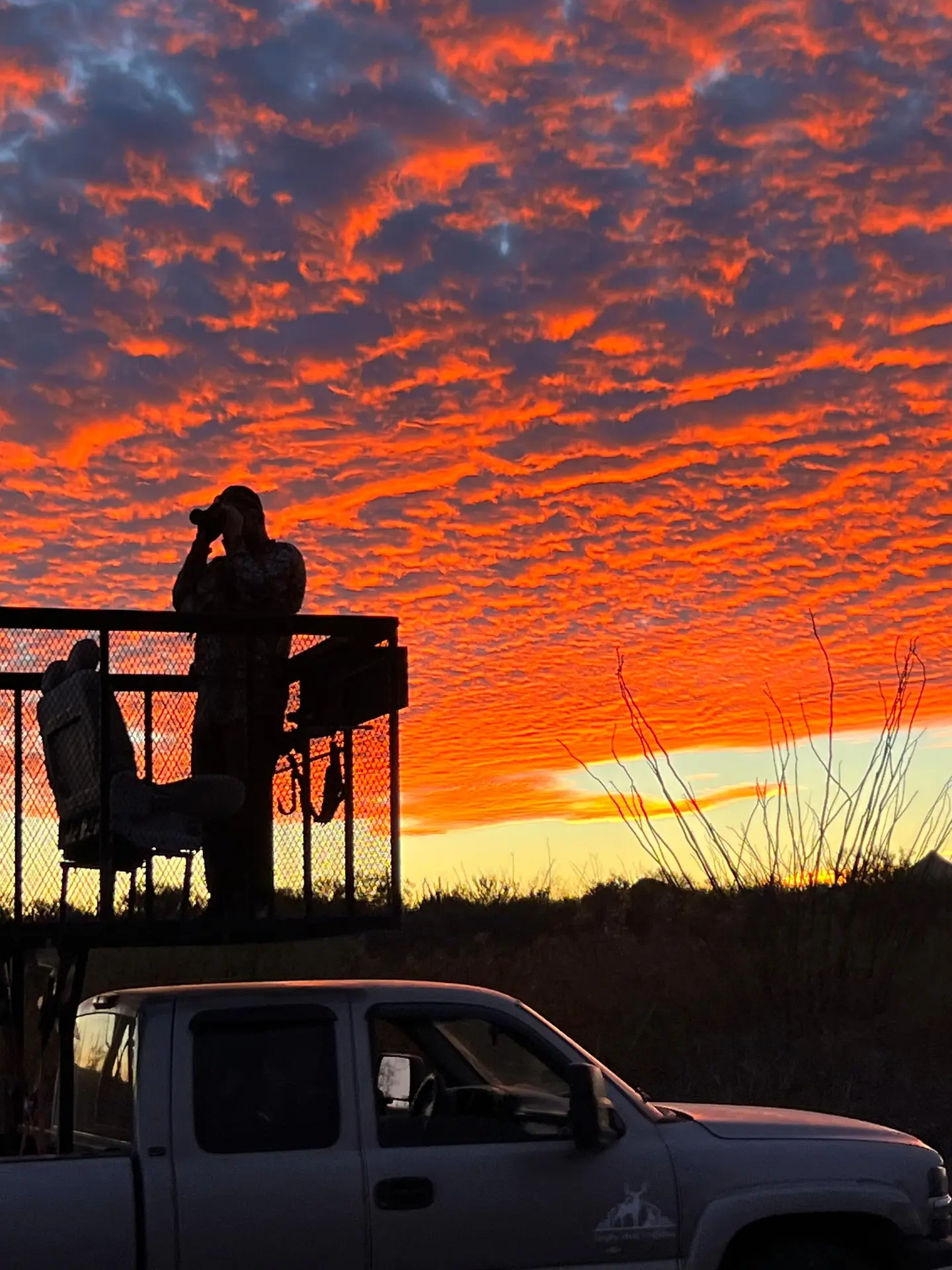
- 15x56 binos on a tripod — for the long sit, picks up bedded deer 10x42s walk past.
- Spotting scope (65–85 mm) for judging antler beyond 800 yards.
- Lightweight carbon tripod with leveling head — non-negotiable for 15s and spotter.
The grid
When we sit a glassing point, we mentally divide the opposite slope into a grid of overlapping rectangles roughly the size of a tennis court. We work top to bottom, left to right, lingering 30–60 seconds on each square. After one full pass we shift the grid by half a rectangle and start again. This is the discipline that separates hunters who find Coues from hunters who don't.
What to look for
- Horizontal lines — every other line in the country is vertical (oak trunks, rock, ocotillo).
- The bright white of the throat patch in shade.
- An antler tip silhouetted against rock — Coues love bedding under junipers with their racks just above cover.
- Movement that doesn't match the wind — an ear, a tail flick, a head turn.
Timing
First light and last light are gold. From 10 a.m. to 2 p.m. most hunters lose focus. Don't. Bedded bucks shift in their beds, stand to stretch, or get pushed by does. We have killed more book Coues at 11:30 a.m. than at 7:30 a.m.
The stalk
Once a buck is located, we mark his position against three landmarks (a tall ocotillo, a notched rock, a lone juniper) and work the wind. Most stalks cover 600–1,500 yards through broken country. We close to 200–400 yards and shoot from a tripod or pack rest. A bad stalk is the most common reason a hunter does not punch his tag — patience to back out and try again at last light beats a rushed shot every time.